⚠️ Pre-launch article — based on beta and official previews. Updated regularly as new information is released.
How Combat Works in Ananta
Ananta’s combat is a real-time action system built around character switching, skill timing, and reaction-based play. You don’t take turns — every fight is live, and how well you manage your team’s abilities in real time determines how fast and cleanly you win.
The core loop is: attack with normal combos → use character skills → dodge attacks → switch characters to continue pressure or apply buffs. Understanding that loop early makes every other combat system click into place.
Basic Controls and Combat Flow
From beta footage and previews, the core combat controls work like this:
- Normal attacks — A basic combo chain that builds on each press. Specific combo lengths vary by character.
- Dodge — A short i-frame roll or dash that cancels the current animation if timed correctly. Dodge-canceling into skills is a key advanced technique.
- Skill / Ultimate — Each character has a signature skill on a cooldown and an ultimate ability that charges over time. Ultimates deal high damage and often change the battlefield state.
- Character switch — Swapping to another character mid-fight keeps the pressure on. Some skills trigger bonus effects specifically on switch-in or switch-out.
- Parry / Counter — A parry or counter mechanic may exist for certain characters. Specifics are TBA.
The combat feel in Ananta leans into rhythm and flow. Spamming attacks without reading enemy patterns will work on early content but falls apart against elite enemies and bosses, where dodge timing and skill windows become required.
Environmental Combat
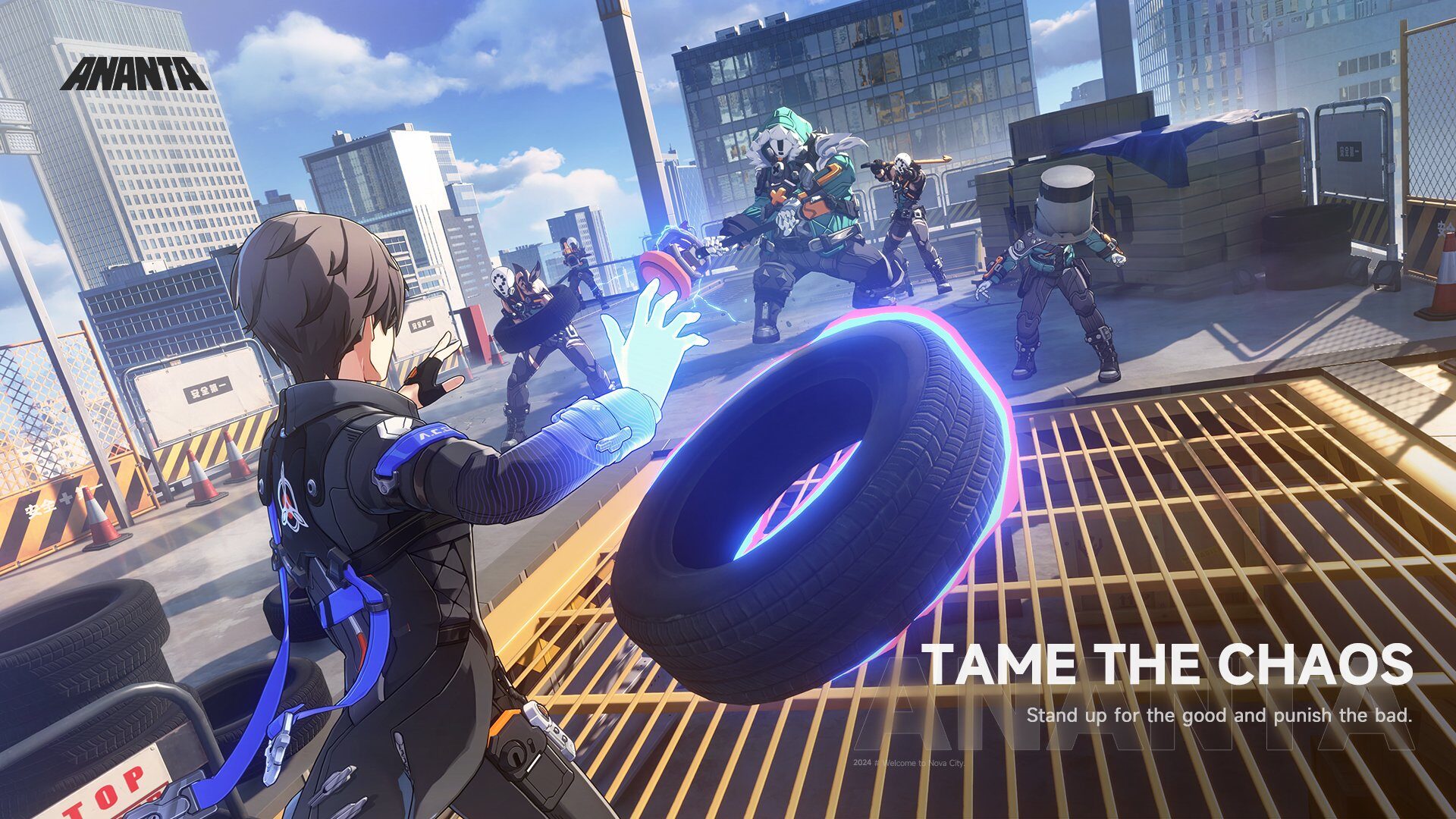
Ananta’s combat is built around using the city itself as a weapon. Confirmed environmental combat features include:
- Urban props as weapons — Items like golf clubs, trash bins, and other city objects can be picked up and used in combat
- Disarming enemies — You can take weapons directly from enemies during a fight, switching your combat style on the fly
- Terrain interaction — The city environment itself plays an active role in combat encounters
This makes every fight in Nova City potentially unique — the best weapon might be whatever’s closest to hand.
Character Abilities in Combat
Every character in Ananta brings two primary tools to a fight: their signature skill and their ultimate ability.
Signature skills are the primary combat identity of each character. An Attacker’s skill might launch a burst combo, apply a debuff, or trigger a stance change. A Support’s skill might heal the active character, buff the team’s damage, or generate energy faster. Skill cooldowns are TBA — exact timings will be confirmed at launch.
Ultimate abilities charge through a combination of dealing damage, taking hits, and time. When the ultimate meter fills, you activate it manually — meaning you control the timing. The best players hold ultimates for high-value moments: an elite enemy’s vulnerable phase, a boss mechanic window, or to recover from a bad situation.
Passive traits modify how a character functions even when they’re not on the field. Many passives activate on teammate actions — for example, a character’s passive might grant a damage bonus to the whole team whenever a skill lands a critical hit. Understanding passives is key to deep team synergy.
Fighting Enemies
Nova City’s enemies are not a monolith — different enemy types have different behaviours, attack patterns, and weaknesses.
Read the attack telegraphs. Almost every enemy attack has a wind-up animation before it hits. Learning to recognize these telegraphs is more important than raw damage numbers, especially in solo combat.
Read enemy patterns. Different enemies have different behaviours and attack patterns. Learning these is more valuable than raw damage output.
Interrupt when possible. Some enemies charge powerful attacks or abilities that can be interrupted with a well-timed skill or stagger hit. Learning which enemies can be interrupted — and when their interrupt window opens — is one of the clearest skill gaps between new and experienced players.
Elite and Boss enemies require preparation. Common enemies in the open world are generally forgiving. Elite and Boss encounters have expanded move sets, phase transitions, and significantly higher health pools. Bring a full team with appropriate levels and gear before attempting them.
Tips for Beginners
Don’t panic roll. Dodge has a cooldown (or stamina cost, depending on final implementation). Burning all your dodges at once leaves you vulnerable when it matters. Use your dodge reactively, not preemptively.
Learn one character before diversifying. It’s tempting to switch between your whole roster, but mastering the skill timing and combo flow of a single character will teach you the system faster than dabbling in all of them.
Use your ultimate on cooldown in normal fights. In casual open-world encounters, don’t hoard your ultimate. Using it regularly keeps you practiced at the timing and keeps pressure on enemies.
Watch enemy health bars for phase transitions. Many enemies change their behaviour, speed, or attack patterns at certain health thresholds. Anticipate this rather than being surprised by it.
Check your gear. Combat power scales with character level, skill upgrades, and equipment. If you’re struggling with content, check whether you’ve fallen behind on upgrades before assuming the fight is too hard.
Difficulty Progression
Ananta’s difficulty scales across several dimensions:
- Story missions are generally accessible. They’re designed to be cleared by players following the natural progression, even with incomplete teams.
- Open world encounters range from trivial common spawns to dangerous elite enemies in contested zones.
- Challenge modes and end-game content are where the difficulty ceiling lives — these are designed for min-maxed teams and require actual mastery of combat mechanics.
The jump from open world to challenge content is significant. Don’t go in underprepared. Build your combat fundamentals in the open world first, then scale up.
See also: Traversal Guide and Team Building Guide.